D1 Defend, Author at D1 Defend - Page 4 of 39 D1 Defend

D1 Defend, Author at D1 Defend - Page 4 of 39 D1 Defend

x

Why Your Business Needs a Knowledge Management System

What if you could download and store industry-related knowledge from each employee at your business? A knowledge management system (KMS) does just that. It streamlines the way businesses organize and share their collective knowledge for current and new employees to easily access and utilize while carrying out their responsibilities.

What Is a Knowledge Management System?

A knowledge management system protects a company’s information assets while putting that information to daily use. A KMS prevents outside parties from accessing unauthorized information while letting current employees access this information to improve their productivity.

A good knowledge management design includes:

  • Engaging information about different aspects of business operations
  • Processes and directives that demonstrate how staff members should interact with each other and the organization as a whole
  • Intuitive interface for easy use
  • Excellent security features

Some business leaders opt for a pre-designed KMS, such as Bloomfire. Others hire software designers to craft a custom KMS for their organization.

Why Do You Need a Knowledge Management System?

A well-designed knowledge management system vastly improves many areas of personal interaction and operational minutia. It prevents company leaders from repeating the same information, techniques, or training instructions. That way, you can spend more time helping your business make valuable progress while the system helps trainees and even veteran staff members become more comfortable and knowledgeable in their roles.

Benefits of a knowledge management system include:

  • Internal innovation and progress
  • Better customer and employee relationships
  • Accessible and intuitive information available at your fingertips
  • Elimination of redundant but necessary tasks
  • Well-crafted, authentic company culture

You see, a KMS does more than make information readily available. It can transform the entire business and brand.

How to Implement a Knowledge Management System

Like any successful venture, KMS integration requires a clear plan with defined objectives. Your first step should involve preparation that includes your staff members and answers questions like:

  • What do they want to see in the new KMS?
  • What features would improve and streamline their daily responsibilities?
  • With what do they currently struggle with that software might resolve?

Use the responses to formulate an overall objective. You should also outline methods for measuring the system’s overall success.

System Organization and Maintenance Best Practices

The keys to an organized, maintained knowledge management system are:

  • Regular updates and bug fixes to improve the interface
  • Check-ins with your staff members to gauge how to improve the system
  • An IT team that to manage maintenance, updates, and fixes
  • The ability to improve and expand the system to better suit your needs

Real-world Impact of Knowledge Management Systems: A Case Study

One knowledge management case study of an organization called Pathfinder International documented a system that made unrecorded “tacit” knowledge more available. The study found that usage of the system increased by 44% over a one-year period, and 96% of employees surveyed said they found what they needed in the knowledge management system.

Your business could take advantage of these positive impacts with a knowledge management system that fits your business’s needs.


Used with permission from Article Aggregator

Boosting Customer Service with Technology

Providing top-notch customer service to small businesses can be challenging. Keeping up with customer inquiries and meeting expectations for quick and effective assistance can be challenging with limited resources. However, with technological advancements, small businesses now have access to tools that can help them deliver better customer service and build customer loyalty.

Chatbots

Using artificial intelligence (AI), chatbots can answer customer questions 24/7. They provide instant assistance, answer frequently asked questions, assist with purchases, or escalate problems to live agents. As a result, chatbots can improve response times and reduce customer frustration by providing quick and easy access to information. In addition, chatbots can handle multiple client inquiries at once, freeing up live agents to address more complex issues.

CRM systems

Customer Relationship Management (CRM) systems help companies manage customer interactions and data all in one place. Businesses can track customer interactions with a CRM system, gather information about their preferences and purchasing history, and use the information to personalize customer service experiences. By having a complete overview of customer interactions, businesses can resolve issues more efficiently, increase customer satisfaction, and identify patterns or trends in customer behavior.

Automated email and SMS messaging

Businesses can communicate with their customers quickly and efficiently using automated messaging. For example, these messages could provide order updates, offer special promotions, or send follow-up surveys to get customer feedback. Furthermore, automated messaging can streamline communication processes and help live agents focus on more complex issues by reducing their workload.

Social media management

Often, customers prefer to reach out to businesses through social media for customer service inquiries. By utilizing social media management tools, businesses can quickly track and respond to these inquiries, improving their online presence and customer satisfaction. In addition, using social media management tools can also help businesses monitor their online reputations, address negative reviews, and gain insights into their customers.

The ability to provide exceptional customer service in today’s fast-paced business world is critical for success. Through technology, small businesses can provide fast and effective support, resolve issues efficiently, and build long-term customer relationships. These technologies help small businesses differentiate themselves from their competitors and position them for future growth and success. By delivering outstanding customer service, small businesses can establish themselves as leaders in their industry, win customer loyalty, and secure a strong and thriving future.

Used with permission from Article Aggregator

Stay Safe from Silent Cyberattacks on IoT Devices

American university researchers uncovered a new cyberattack called Near-Ultrasound Inaudible Trojan (NUIT). It threatens devices with voice assistants, launching completely silent attacks. Fortunately, researchers exposed the vulnerability before threat actors could exploit it. The discovery is a warning to everyone to take the necessary precautions.

How Inaudible NUIT Attacks Work

While human ears can’t detect near-ultrasound waves, smart speakers and voice assistants can. And they respond to it. That means NUIT can manipulate devices, and the attacks will go unnoticed. Threat actors can embed NUIT in websites that play YouTube videos or other media. They can fool targets into playing malicious audio that will launch the attack. They can even play it through Zoom calls.

There are two NUIT attack methods:

  • NUIT-1 – A device is both the transmitter of the NUIT and the recipient. For example, a target plays a malicious audio file on their smartphone. The microphone in the smartphone will hear it and perform the inaudible command. It can send a text to someone or open the garage door.
  • NUIT-2 – A device with a speaker transmits the NUIT to other devices with microphones. An example is when a victim plays malicious media on a smart TV, and the NUIT communicates with the smartphone’s voice assistant.

Inaudible NUIT commands are only 0.77 seconds long. However, researchers explain that the speaker playing the NUIT has to reach a particular volume level for the attack to work. If successful, NUIT attacks can pose severe risks.

They can control IoTs connected to your smartphone. They can disable your home alarm or unlock your garage door without you knowing it. Because voice assistants can also open websites, NUIT attacks can drop malware on your device without your participation.

Precautions You Can Take Against NUIT Attacks

The researchers took 17 devices and checked their vulnerability to NUIT attacks. Unfortunately, all were controllable using any voice, even robot-generated ones. The only exception was Apple’s Siri which only follows commands from the smartphone’s owner. If your smartphone has a voice authentication feature, enable it as additional security against NUIT attacks.

Another way to deter NUIT is by using earphones instead of broadcasting audio on speakers. Researchers also encourage users to monitor microphone activity on their devices. Android and iOS smartphones both have on-screen indicators for that.

The Bottom Line

With NUIT’s ability to download malware, it can become a real threat to organizations. Business owners should implement strict security measures to mitigate risks. Secure your network and devices by installing security software, enabling spam filters, and setting up a firewall. In addition, have policies in place to guide your employees. You must also back up your data to help speed up recovery in case of data loss.

Used with permission from Article Aggregator

Hackers Fool Multi-Factor Authentication

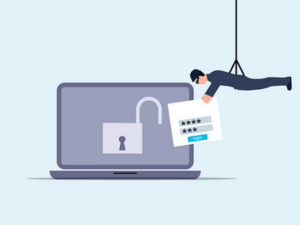
In the world of cybersecurity, change is the only constant. For many business owners, multi-factor authentication (MFA) has been the go-to option for extra security. But hackers today are more ingenious, working around the old systems that used to stop them. New tricks are emerging to get business data and customers’ sensitive information. MFA remains an essential to online security, but hackers are figuring out ways to bypass it.

Why Does This Matter for Your Business?

The danger is that hackers could take over your business account. Hackers who get past your MFA could get to your private business data. They could mess up your work, misuse your customer data, or even conduct fraud under your name. Just using MFA isn’t enough anymore.

MFA Weak Points

Here are possible vulnerabilities in the MFA system that businesses should know:

  • Social Engineering. Hackers trick users into giving away their MFA codes by pretending to be someone they trust, like customer service or IT support.
  • Stealing Codes. Threat actors steal your password or security code by intercepting your messages with the security team.
  • MFA Prompt Bombing. Hackers will send too many security requests, so you click “approve” to stop the alerts. Once you do, the hacker, who started the prompts, gets access.
  • SIM Card Swapping. This happens when a hacker fools your phone company into giving your phone number to their SIM card. They can then steal security codes sent by text.
  • Malware. Threat actors can use harmful software to get to your device and steal MFA data through bad apps, email attachments, or unsafe websites.

Strengthening Your MFA Strategy

Rethink how you manage your online security by enhancing password hygiene and promoting a culture of alertness. Use different, tough-to-guess passwords for more secure processes. Train your team to recognize when someone is trying to steal their info. Educate them about the latest tricks used by hackers. Keep your systems and security software updated. Updates often include fixes for new threats. In addition, consider using controls that limit unsuccessful login attempts. This can stop attacks and protect against account lockouts.

A Layered Defense Is Your Best Offense

MFA is an integral part of your strategy to stay safe online. However, it shouldn’t be your only security strategy. Knowing how hackers get past extra security and staying informed about new cyber threats helps you protect your business. Create a robust security system with many layers. Ultimately, it is all about staying one step ahead of the hackers.

Used with permission from Article Aggregator

The Role of Managed IT Services in Digital Transformation

By leveraging new technologies and digital processes, many businesses today can improve efficiency, reduce costs, and better serve their customers. Despite this, implementing the latest technologies and procedures can be a complex and challenging task, especially for businesses lacking in-house expertise and resources. It is here where managed IT services can play a crucial role, providing the knowledge and support required to adopt new technologies and digital processes.

Managed IT services provide businesses access to a team of experienced IT professionals who can provide expert guidance and support throughout the digital transformation process. Assessment of the organization’s needs, identification of appropriate technologies, and implementation of these technologies and processes are all part of this process. Digital transformation can be especially beneficial for companies that lack the in-house IT resources or expertise to handle it.

A managed IT service can help businesses better address the risks associated with digital transformation and provide expert guidance and support. Assuring that the latest technologies and processes are secure and compliant with industry regulations is one aspect of this, as well as helping businesses recover from potential disruptions and setbacks faster. By providing this level of support and protection, managed IT services can help companies to feel more confident and secure as they navigate the often-unfamiliar waters of digital transformation.

Many businesses have benefited from managed IT services in their digital transformation efforts. For example, managed IT services are often used to help implement e-commerce platforms or electronic health record systems in retail and healthcare. Regardless of the scenario, managed IT services providers will work closely with a company to assess its needs, identify the right technology and processes, as well as ensure that the new systems operate smoothly.

The adoption of new technologies and digital processes can be greatly enhanced by managed IT services as part of a digital transformation effort. In addition to providing expert guidance and support, managed IT services can help businesses navigate the complexities of digital transformation and drive business growth by minimizing risks.

Used with permission from Article Aggregator

Schedule a Call